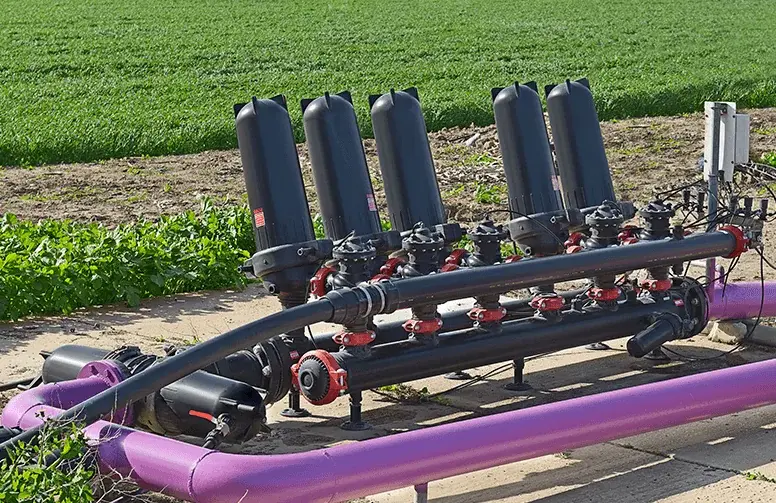
Spin Klin™
Spin Klin™, developed by Amiad Water Systems, is a disc filtration technology that removes solid particles, organic matter, and sediments from water used in agricultural irrigation and industrial applications. It uses grooved polymer discs that retain particles ranging from 10 to 400 microns, depending on the configuration. It incorporates an automatic self-cleaning backwashing system that reduces maintenance requirements, prevents clogging of irrigation emitters, and improves operational efficiency and water and energy use.
Country:

Spin Klin™ disc filtration technology, developed by Amiad Water Systems, is a physical water treatment system designed to remove suspended solid particles, organic matter, and sediments, improving the quality of water used in agricultural irrigation systems and industrial applications. It operates using stacked and compressed grooved polymer discs that form multiple filtration channels capable of retaining particles of different sizes, with filtration ratings ranging from 10 to 400 microns, depending on the configuration. It incorporates a self-cleaning backwashing mechanism that removes accumulated solids and reduces maintenance requirements. Its application in agriculture helps prevent clogging of irrigation emitters, improve system operational continuity, and optimize water and energy use associated with filtration.
Water use efficiency
Main theme:
Asian
Region:
400 - 600
Precipitation (mm):
Medium
Application difficulty:
2, 6, 9, 12, 13 and 15
SDGs impacted:
Electric
Energy used:
70 - 90
Efficiency (%):
Rural
Sector:
Amiad's Spin Klin™ disc filtration technology contributes to efficient water use in agricultural irrigation systems by removing particles and sediments that can clog irrigation emitters. Its self-cleaning backwashing system maintains filtration performance and may reduce water consumption associated with cleaning operations, depending on operating conditions. Additionally, it facilitates the use of water sources of varying quality, including previously treated reclaimed water, reduces the need for manual interventions, and promotes more sustainable water resource management.
Expected environmental impact:
$4,000
Estimated value: